Destination Guides
Japan Itinerary from Dubai: A Practical 10-Day First Trip
A realistic ten-day first trip through Tokyo, Kyoto, Nara and Osaka, with the train, season and visa decisions UAE travellers need to make before booking.
By Noushad Eranniyan6 min read
On this page · 12 sections
- Japan itinerary from Dubai at a glance
- Days 1–3: give Tokyo room to breathe
- Day 4: choose Hakone or stay in Tokyo
- Days 5–7: slow down in Kyoto
- Day 8: Nara as a day trip
- Days 9–10: finish in Osaka
- When is the best time to visit Japan?
- Trains, IC cards and the rail-pass question
- Japan visa planning for UAE residents
- What the Holidayys Japan package covers
- Frequently asked questions
- Build the trip around your pace
A first trip to Japan becomes much easier once you stop trying to see everything. For travellers from Dubai, ten days is the useful middle ground: enough time for Tokyo, Kyoto and Osaka, without turning every morning into a hotel checkout.
This Japan itinerary from Dubai follows that simple route. It leaves space for jet lag, one day outside the big cities, and the practical details that make the difference between a smooth trip and an exhausting one.
Japan itinerary from Dubai at a glance
- Days 1–3: Tokyo — old neighbourhoods, modern districts and one flexible day
- Day 4: Hakone or another day trip from Tokyo
- Days 5–7: Kyoto — temples, traditional streets and an unhurried evening
- Day 8: Nara day trip
- Days 9–10: Osaka — food, neighbourhoods and departure
Japan's national tourism organisation recommends roughly ten days to two weeks for the classic Tokyo–Kyoto–Osaka route. That is good advice. In a week, choose one base and make day trips; with ten days, the three-city route stops feeling like a race.
Days 1–3: give Tokyo room to breathe
Day 1 should be deliberately light. Check in, learn the nearest station and explore one neighbourhood near your hotel. After an overnight journey, a complicated cross-city plan usually survives only on paper.
On day 2, pair places that sit naturally together. One good east-Tokyo day is Asakusa, Senso-ji and the lanes around the temple, followed by Ueno or the riverside. A west-Tokyo day can combine Meiji Jingu, Harajuku, Shibuya and an evening in Shinjuku. The point is not to tick off every district; it is to avoid spending half the day changing trains.
Keep day 3 flexible. Food lovers might explore an outer market and a specialist neighbourhood. Families may prefer a museum or theme-park day. Shoppers can give Ginza, Shibuya or Akihabara the time each actually needs.
Day 4: choose Hakone or stay in Tokyo
Hakone is the classic change of pace: mountain scenery, hot springs and, in clear weather, views towards Mount Fuji. It works as a day trip, but an overnight stay in a ryokan is better if the hot-spring experience matters to you.
There is no penalty for staying in Tokyo instead. If your first three days felt rushed, another city day gives the rest of the itinerary a calmer rhythm. Mount Fuji is famously weather-dependent, so do not build the entire trip around one promised view.
Days 5–7: slow down in Kyoto
The Tokaido Shinkansen gets you from Tokyo to Kyoto in roughly two hours and twenty minutes. Send large luggage ahead or reserve the correct luggage space where required; travelling with one small overnight bag makes the transfer much easier.
Kyoto rewards early starts and neighbourhood planning. Put nearby sights together rather than crossing the city repeatedly:
- Eastern Kyoto: Kiyomizu-dera, the preserved lanes of Sannenzaka and Ninenzaka, Gion and Yasaka Shrine
- Northern Kyoto: Kinkaku-ji and nearby temple gardens
- Western Kyoto: Arashiyama early in the morning, then quieter temples beyond the bamboo path
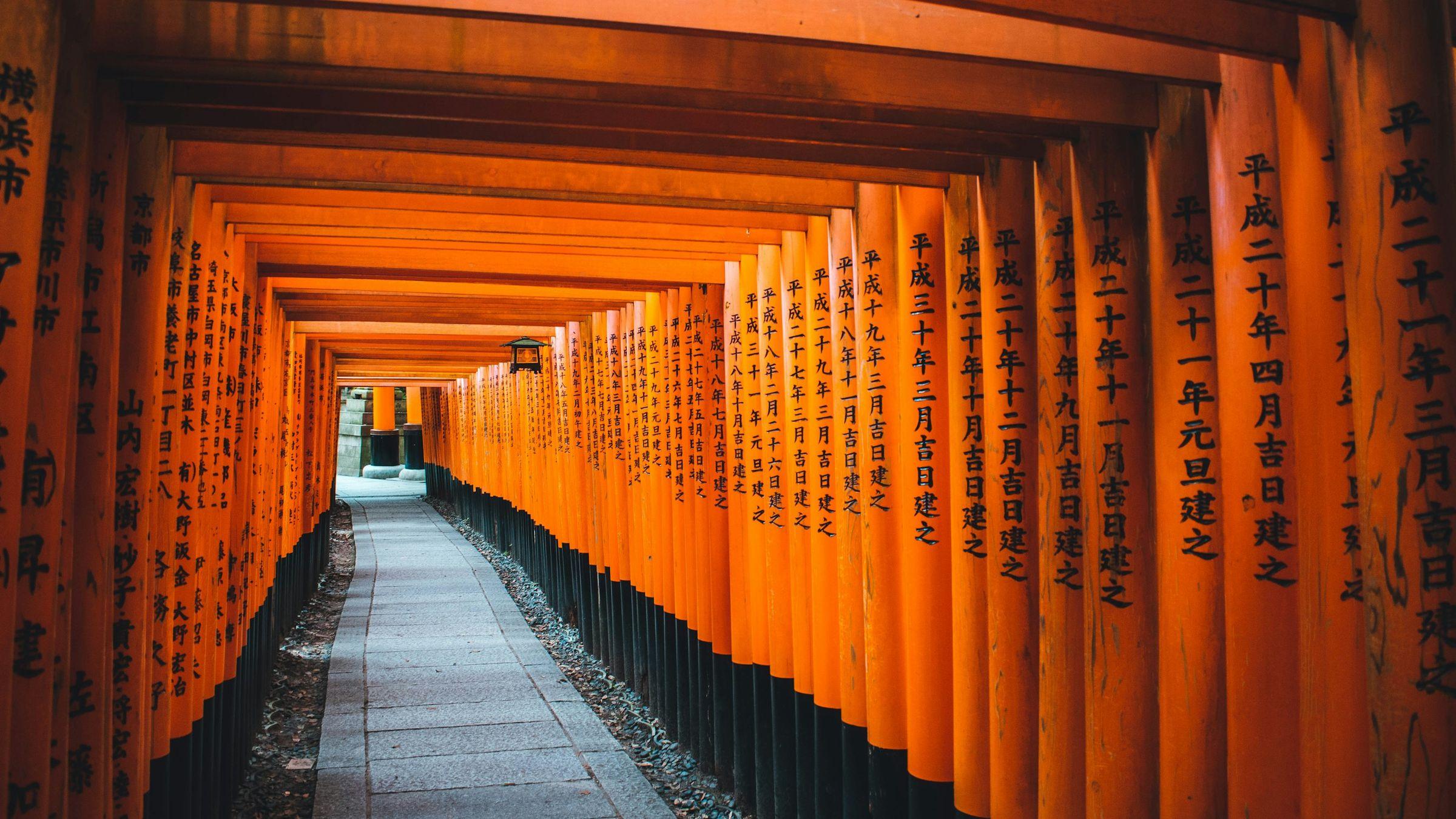
- Southern Kyoto: Fushimi Inari before the main crowds, followed by a sake district or a relaxed afternoon
Choose two areas per day at most. Kyoto's famous locations can be crowded, and the city is more rewarding when you leave time for a garden, a tea house or a side street that was not on the checklist.
Day 8: Nara as a day trip
Nara gives you a compact day of major cultural sites without another hotel move. Nara Park, Todai-ji and the older lanes around Naramachi fit naturally together. The official Japan tourism itinerary groups Kyoto, Nara and Osaka into a three-day Kansai route, which is why Nara sits neatly between the two cities.
The deer are wild animals, not props. Feed only the approved crackers, keep maps and paper out of reach, and step away if an animal becomes persistent.
Days 9–10: finish in Osaka
Osaka is a good final stop because it is easygoing, food-focused and well connected to Kansai International Airport. Spend one day around Osaka Castle and the central districts, then use the evening for Dotonbori, Namba and the streets beyond the brightest signs.
On the last day, protect the airport transfer. Do not schedule a distant attraction before an international flight. A slow breakfast, last-minute shopping and a direct train to the airport is a better ending than watching the departure board from a taxi in traffic.
When is the best time to visit Japan?
- March to May: mild spring weather and blossoms, with heavy demand around peak bloom and Golden Week
- June to August: rainy conditions early in the season, then heat and humidity; summer festivals are the reward
- September to November: comfortable autumn travel and foliage, again with popular dates booking early
- December to February: cold but often clear in Tokyo and Osaka, with fewer visitors on many weekdays
Japan's busiest domestic travel periods include Golden Week in late April and early May, Obon around mid-August, and the New Year holiday. If you travel then, reserve intercity transport and accommodation earlier than usual.
Trains, IC cards and the rail-pass question
Buy or activate a rechargeable IC card for local trains, metros, buses and many small purchases. Suica, PASMO and ICOCA are issued in different regions but are widely interoperable. Keep some cash because not every rural bus, ticket machine or small business accepts the same payment methods.
Do not assume a national rail pass is automatically cheaper. Price the long-distance journeys in your actual itinerary first, then compare them with the current pass price. For a simple Tokyo–Kyoto–Osaka route, point-to-point tickets may be the sensible choice; a pass becomes more valuable when you add several expensive intercity journeys.
Japan visa planning for UAE residents
Visa requirements depend on your passport, not only your UAE residence. Japan's Ministry of Foreign Affairs says residents of the UAE who are not visa-exempt can use the eVISA route through an accredited agency for eligible short tourism trips. The current eVISA is for a single-entry short stay of up to 90 days, and the digital visa issuance notice must be displayed online at the airport — a screenshot or printout is not accepted.
Check the rule for your nationality before buying non-refundable travel. Holidayys has a dedicated Japan visa service, or you can browse all visa destinations.
What the Holidayys Japan package covers
Our Ultimate Japan Adventure is a ten-day, nine-night package from AED 9,199 per person. The current package includes round-trip flights, nine nights of accommodation, daily breakfast, an English-speaking guide, entrance fees, a JR Pass, a tea ceremony and a sushi-making class. Travel insurance, personal expenses, optional activities, alcohol and tips are excluded.
That package suits travellers who want the major logistics arranged. Independent travellers can still use this itinerary as the backbone and book each piece separately.
Frequently asked questions
Is ten days enough for Japan?
Yes. Ten days is enough for Tokyo, Kyoto, Nara and Osaka at a sensible pace. It is not enough for those cities plus Hiroshima, Hokkaido and several rural regions without spending too much of the trip in transit.
Should I fly home from Tokyo or Osaka?
If fares and schedules are comparable, an open-jaw route — arriving in Tokyo and leaving from Osaka — avoids backtracking. Compare the total journey cost, including the final train, rather than only the airfare.
Do I need a Japan Rail Pass?
Not automatically. Add the current prices of your planned long-distance journeys and compare that total with the pass. Local IC cards and individual Shinkansen tickets can be better for a straightforward one-way route.
What is the best first-time route in Japan?
Tokyo, Kyoto and Osaka form the most practical first-time route. Add Nara as a day trip and Hakone only if nature or hot springs are a priority.
How long is the flight from Dubai to Japan?
A non-stop Dubai–Tokyo flight is roughly ten hours, depending on routing, winds and the operating airline. See our guide to flight times from Dubai for context.
Build the trip around your pace
The best Japan itinerary from Dubai is not the one with the most pins on a map. It is the one that gives Tokyo, Kyoto and Osaka different roles and leaves enough time to notice why they feel so different.
Browse the ten-day Japan package, check your Japan visa requirement, or tell us your dates and we will help shape the route.
Primary-source checks: Japan National Tourism Organization guidance on trip length and seasons, its train and IC-card guide, and the Japanese Ministry of Foreign Affairs eVISA rules, checked 28 August 2026. Entry and transport rules can change; verify again before booking.
- Japan
- Travel
- Culture
- Adventure
- Vacation