Destination Guides
Places to Visit in Azerbaijan: 14 Highlights from Baku to Sheki (2026)
From Baku's Old City and Flame Towers to Shahdag, Gabala and Sheki, here are 14 places to visit in Azerbaijan, with distances, entry fees and the best season for each.
By Noushad Eranniyan17 min read
On this page · 12 sections
- Azerbaijan trip at a glance
- Where to go in Azerbaijan
- Baku: Old City to modern landmarks
- Day trips from Baku: Gobustan, Yanar Dag and Ateshgah
- The mountains: Shahdag, Gabala and Lahij
- Sheki, Quba and the north
- Flights from the UAE to Baku
- Do you need a visa for Azerbaijan?
- Best time to visit Baku, and Azerbaijan in winter
- Plan your Azerbaijan trip with Holidayys
- Frequently asked questions
- Related guides
The short answer: Start in Baku’s walled Old City and the Flame Towers skyline above it, then build out from there: Gobustan’s rock carvings and mud volcanoes are about an hour south, the mountain resorts of Shahdag and Gabala are roughly 3 hours north, and the UNESCO-listed old town of Sheki is a further 4–4.5 hours on. A week covers the highlights comfortably; a long weekend covers Baku plus one day trip. Flights from Dubai take about 3 hours, and most UAE residents need either an airport visa or the ASAN e-visa. Our National Day Azerbaijan package runs 6 days and 5 nights from AED 3,199 per person, departing 2 December 2026.
Most people searching for this are UAE residents weighing up where to go on a short Azerbaijan trip, or deciding whether to add a mountain day or a second town beyond Baku. This guide works through the country place by place – what each one is, how far it sits from Baku, how long to allow, what it costs to get in, and when to go – so you can build an itinerary that fits the time you have.
Azerbaijan trip at a glance
| Azerbaijan places to visit | |
|---|---|
| Flight time from Dubai | About 3 hours, non-stop from Dubai or Sharjah |
| Visa | Visa-free for UAE nationals; airport visa on a valid UAE residence visa, or the ASAN e-visa (about USD 23), for most others |
| Best season for sightseeing | April–June and September–October |
| Ski season (Shahdag & Gabala) | Typically mid-December to April, confirmed yearly by each resort |
| Days to see the highlights | Allow 6–7 days for Baku, the mountains and the north; 3–4 days for Baku and one day trip |
| Currency | Azerbaijani manat (AZN); 1 AZN is about AED 2.16 |
Where to go in Azerbaijan
| Place | Region | Distance from Baku | Best for |
|---|---|---|---|
| Icherisheher & Maiden Tower | Baku | In the city centre | Walking the UNESCO-listed walled Old City |
| Palace of the Shirvanshahs | Baku | In the city centre | Shirvanshah-era royal architecture |
| Flame Towers & Heydar Aliyev Center | Baku | In the city centre | The modern skyline and architecture |
| Baku Boulevard & Highland Park | Baku | In the city centre | Seafront walks and panoramic views |
| Azerbaijan Carpet Museum | Baku | In the city centre | Carpet-weaving history |
| Gobustan National Park | Absheron peninsula | About 64 km, 1 hour | Prehistoric rock carvings, mud volcanoes |
| Yanar Dag | Absheron peninsula | About 25 km, 30 minutes | A hillside that burns continuously |
| Ateshgah | Absheron peninsula | About 30 km, 35 minutes | A Zoroastrian-Hindu-Sikh fire temple |
| Shahdag Mountain Resort | Greater Caucasus | About 210 km, 3 hours | Skiing and mountain scenery |
| Gabala (Tufandag & Nohur Lake) | Greater Caucasus | About 200–210 km, 3 hours | A cable car, a mountain lake, skiing |
| Lahij | Greater Caucasus | About a 3-hour drive | A living copper-smithing village |
| Sheki | North-west Azerbaijan | About 300 km, 4–4.5 hours | The UNESCO-listed Khan’s Palace |
| Quba & Khinaliq | Greater Caucasus, north | About 170–220 km, 2–4.5 hours | One of the Caucasus’s highest villages |
| Candy Cane Mountains | Khizi district | About 100 km, 1.5–2 hours | Striped sandstone hills |
Baku: Old City to modern landmarks
Icherisheher (the Old City) and the Maiden Tower
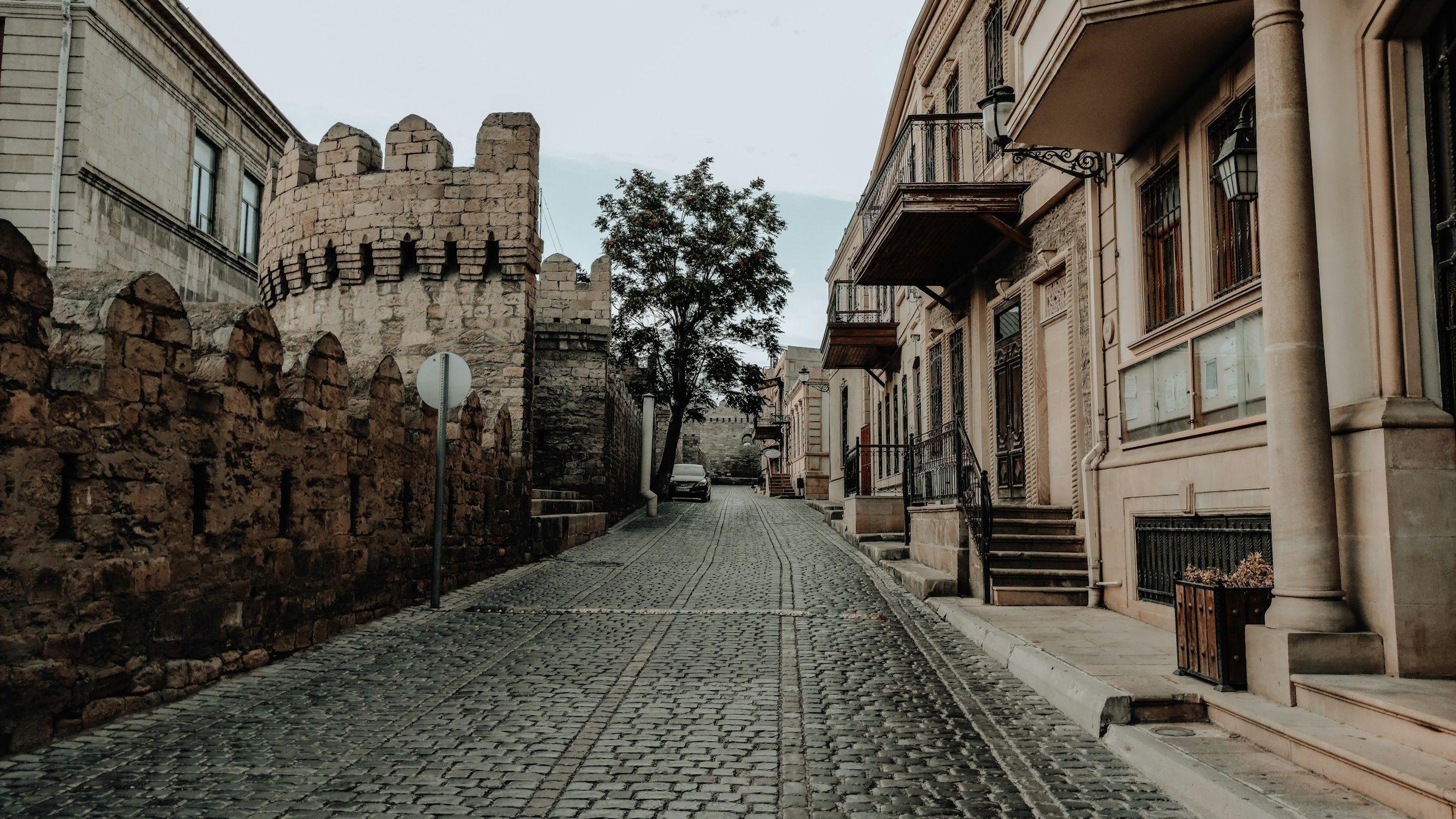
Icherisheher is Baku’s walled medieval core, a tangle of narrow lanes, caravanserais and mosques inside stone fortifications dating back to at least the 12th century. UNESCO inscribed it, together with the Shirvanshahs’ Palace and the Maiden Tower, as a World Heritage Site in 2000. The Maiden Tower, an eight-storey cylindrical stone tower whose original purpose is still debated, is the Old City’s best-known landmark and the one most visitors climb for a view over the rooftops.
Walking the Old City’s streets is free. Climbing the tower costs around AZN 15 (about AED 32) for foreign visitors, and a combined ticket covering the tower, the Shirvanshahs’ Palace and the underground bathhouses runs to roughly AZN 25 (about AED 54) at some ticket counters – prices vary by source, so check the current rate at the gate. Allow half a day to wander the lanes properly, longer if you climb the tower and visit the museums inside the walls. It is fine to visit year round, though Baku’s wind – the city has long been nicknamed the “Windy City” – makes the open ramparts cold in winter. Go early morning or just before sunset to avoid both the heat and the cruise-ship crowds.
The Palace of the Shirvanshahs
The Palace of the Shirvanshahs is a 15th-century royal complex built for Azerbaijan’s Shirvanshah dynasty, with a mosque, a mausoleum, a bathhouse and a divan hall set around a courtyard inside the Old City walls. It is the best-preserved piece of Shirvanshah-era architecture anywhere, and the reason Icherisheher’s UNESCO listing names the palace specifically alongside the tower.
It sits a short walk from the Maiden Tower, so the two are usually seen together. Entry runs about AZN 10 (about AED 22) for foreign visitors, or is covered by the combined Old City ticket mentioned above. Allow an hour to 90 minutes for the palace itself. Like the rest of the Old City, it works in any season. A guide at the entrance, for a small extra fee, is worth it here, since the complex has little posted signage.
Flame Towers and the Heydar Aliyev Center
The Flame Towers are three glass skyscrapers shaped like flames, finished in 2012, that now define Baku’s skyline from almost anywhere in the city; at night they run a light show that switches between fire, the Azerbaijani flag and a shimmering water pattern. We could not confirm a general public viewing deck inside – access is largely tied to the hotel and offices in the complex – so treat the towers as a sight to photograph rather than to enter. The Heydar Aliyev Center, a cultural centre designed by Zaha Hadid with no straight lines on its exterior, is a short taxi ride away and does take visitors, with a museum, an auditorium and rotating exhibitions.
Both sights work well on the same afternoon. The Flame Towers cost nothing to view from outside; the Heydar Aliyev Center charges around AZN 15 (about AED 32) for general admission, with the classic car exhibition a further AZN 10. Allow an hour for the Heydar Aliyev Center’s main halls, then time it so you see the Flame Towers lit up after dark – Highland Park, the Boulevard and Flag Square all give a clear view. Neither sight depends much on season.
The Baku Boulevard and Highland Park
The Baku Boulevard is the city’s seafront promenade along the Caspian, running from the Old City past National Flag Square and on into the newer White City and Bayil stretches – the original 1909 section has grown, in stages, into a waterfront park now several kilometres long. Highland Park sits on the ridge above it, next to the Alley of Martyrs memorial, and gives the best single panoramic view over the bay, the Old City and the Flame Towers together.
Both are free to enter. A funicular runs from the Boulevard up to Highland Park for a small fare, or you can climb the roughly 500-step staircase instead. Allow an hour or two for a walk along the Boulevard, plus 30–45 minutes at the Highland Park viewpoint. The Boulevard is pleasant in most seasons but genuinely good in winter, once Baku’s summer heat has gone; dress for the wind off the Caspian rather than the cold. Go toward sunset for the best light on the towers.
The Azerbaijan Carpet Museum
The Azerbaijan National Carpet Museum, on the Boulevard, is built in the shape of a giant rolled-up carpet and holds one of the world’s largest collections of Azerbaijani carpets and other woven work, some pieces centuries old. Carpet weaving here is recognised by UNESCO as part of the country’s Intangible Cultural Heritage, and the museum is the clearest place to see why the craft still matters.
The museum’s own ticket page lists adult admission for foreign visitors at AZN 10 (about AED 22), with the temporary exhibition hall and the jewellery collection each a further AZN 3, and an audioguide available for AZN 5. Allow an hour to 90 minutes. It is closed on Mondays, and the ticket office keeps shorter hours on weekdays (10:00–18:00) than weekends (11:00–19:00) – check before planning a Monday visit.
Day trips from Baku: Gobustan, Yanar Dag and Ateshgah
Gobustan National Park and the mud volcanoes
Gobustan protects more than 6,000 prehistoric rock carvings cut into boulders on a semi-desert plateau south of Baku, showing hunting scenes, dancing figures and animals cut many thousands of years ago. UNESCO inscribed it as the Gobustan Rock Art Cultural Landscape in 2007. A separate attraction nearby, reached by a short 4x4 ride, is a field of mud volcanoes – small cones that bubble cold mud rather than lava, one of the odder sights in the country.
Gobustan is about 64 km and an hour’s drive from Baku. Entrance to the reserve and museum runs around AZN 10 (about AED 22) per person; the 4x4 ride out to the mud volcanoes is a separate charge, often around AZN 15. Allow a half day to cover both the carvings and the volcanoes comfortably, including the drive. It is an exposed, outdoor site, so it suits spring, autumn or winter better than the height of summer, when the plateau has no shade and little breeze.
Yanar Dag, the burning mountain
Yanar Dag is a natural gas seep on a hillside that has burned continuously for decades, a line of flame several metres long that needs no fuel beyond the gas escaping through the rock. It is a strange, specific sight rather than a grand one, and most visitors give it 20 to 30 minutes on the way to or from Ateshgah.
It sits about 25 km from central Baku, roughly a 30-minute drive. Standalone entry runs around AZN 9 (about AED 19); a combined ticket with Ateshgah costs more, and the sources we checked disagreed on exactly how much, so ask at the gate which combination you are being offered. It burns in any weather and any season, though it is more dramatic after dark.
Ateshgah, the fire temple at Surakhani
Ateshgah is a walled fire temple at Surakhani, on the Absheron peninsula, built where natural gas once seeped up and burned through cracks in the ground. Zoroastrian, Hindu and Sikh traders and pilgrims used it as a place of worship from at least the 17th century, drawn by fire that appeared to rise from the earth itself; the surrounding gas field has since been tapped for other use, and the temple’s flames now run on piped gas.
It is about 30 km from central Baku, around a 35-minute drive, and is usually paired with Yanar Dag on the same half-day trip. Foreign-visitor entry is around AZN 15 (about AED 32); as above, a combined ticket with Yanar Dag is sometimes offered at the gate. Allow 45 minutes to an hour. It works year round, since the cells and courtyard are mostly outdoors but shaded.
The mountains: Shahdag, Gabala and Lahij
Shahdag Mountain Resort
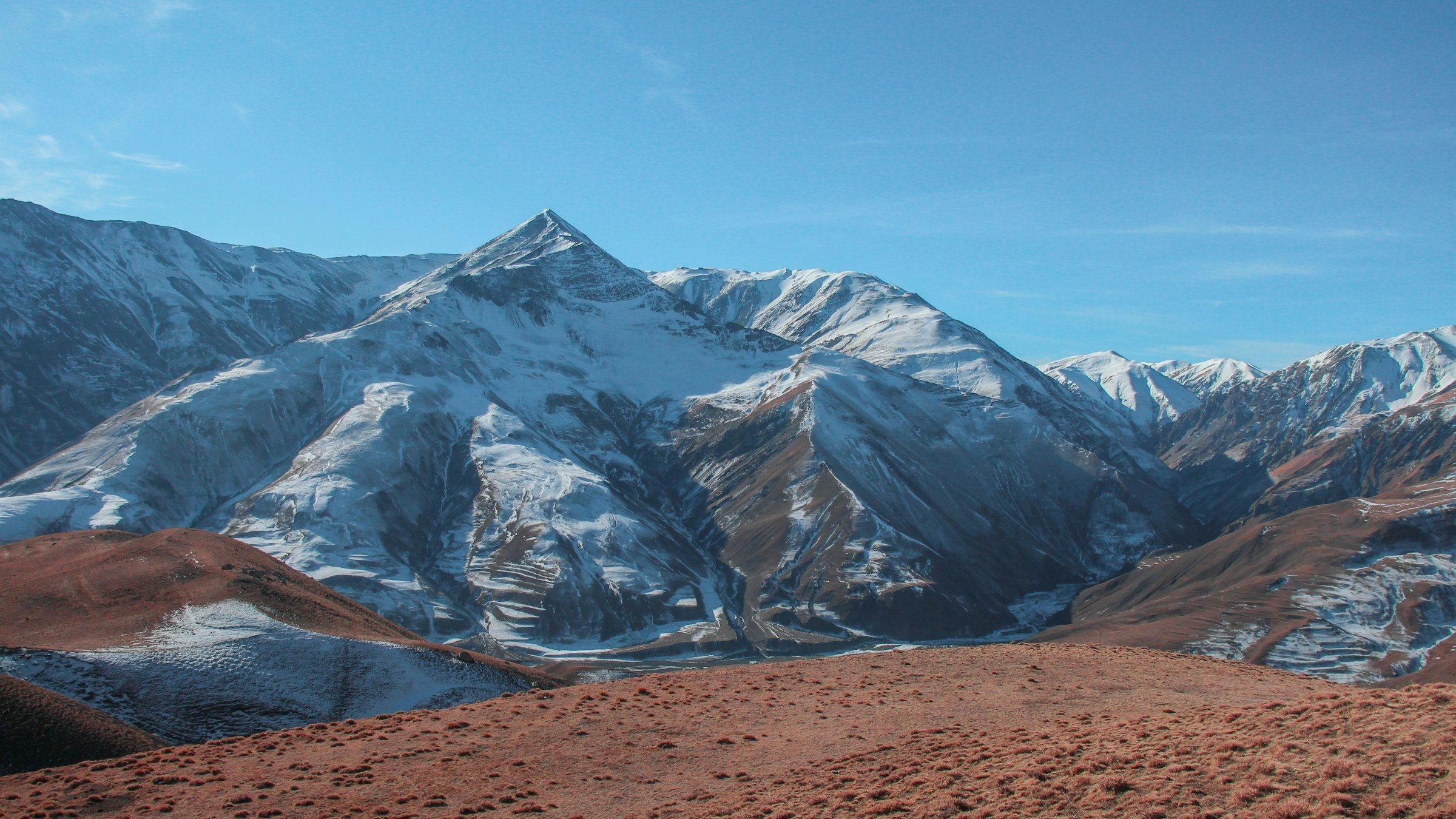
Shahdag is Azerbaijan’s main ski resort, built into the Greater Caucasus near Qusar, with a base station at around 1,435 metres and lift-served terrain reaching above 2,550 metres across roughly 45 km of marked pistes. In winter it is the obvious answer for UAE residents who want to ski without a long-haul flight; outside the snow season it works as a cooler mountain base for hiking.
The resort and Azerbaijan’s tourism board both put the drive from Baku at about 210 km and 3 hours, on a good road via Gusar. The ski season typically opens in mid-December and runs to mid-April, with four new high-speed chairlifts listed for the 2026/27 season on skiresort.com’s Shahdag page; an exact opening date for this coming winter had not been published when we checked on 9 October 2026, so confirm it with the resort before booking dates around it. Lift passes and gear hire are priced separately and change season to season – check shahdag.az directly rather than a figure here. Outside winter, allow a full day for the drive plus a walk; in winter, most visitors stay at least one night to get a full day on the slopes.
Gabala: Tufandag and Nohur Lake
Gabala, in the Caucasus foothills north-west of Baku, is best known for the Tufandag Mountain Resort’s cable car, which climbs from the valley floor at around 975 metres to about 1,920 metres, and for Nohur Lake, a reservoir-fed mountain lake roughly 5 km from Gabala town, ringed by hills and used for boating, fishing and horse riding in the warmer months.
Gabala sits about 200–210 km from Baku, roughly a 3-hour drive. The Tufandag cable car runs year round and costs around AZN 14 for a two-stage ride or AZN 24 for the full route (about AED 30–52); entry to the resort grounds themselves is free. Tufandag’s ski season typically runs from late December to early April, with the same caveat as Shahdag: check the resort’s own site for this winter’s confirmed dates rather than assuming the usual window holds. Allow a full day for Gabala, combining the cable car with Nohur Lake and, if time allows, the Shamakhi road back toward Baku. Outside ski season, this is a green, cool detour from Baku’s summer heat – one of the better answers to things to do in Baku when you want a day away from the city rather than in it.
Lahij, the copper-smithing village
Lahij is a mountain village on the southern slope of the Greater Caucasus, at around 1,200–1,500 metres, reached by a drive through a dramatic gorge. It has worked copper for centuries – azerbaijan.travel notes the trade once supported more than 100 workshops, against a handful today – and its cobbled lanes, stone houses, and coppersmiths still hammering out jugs and trays in open-fronted shops are the reason to come. The village is also home to the Tat, an ethnic minority with their own language, distinct from Azerbaijani.
Lahij is about a 3-hour drive from Baku, per azerbaijan.travel, along a route the tourism board itself calls geologically spectacular. There is no general entry fee to the village; individual workshops sell what they make, and buying something, or leaving a small amount, is the usual way to watch a smith at work up close. Allow half a day, including the drive, or stay overnight to add a hike into the surrounding hills. Spring through autumn suits it best, for the mountain air and for workshops being open; some close in the depths of winter.
Sheki, Quba and the north
Sheki and the Khan’s Palace
Sheki, in the north-west, was the seat of the Sheki Khanate and keeps the look of it: a restored khan’s summer palace covered in stained glass and frescoes, a historic caravanserai, and a walled old town that UNESCO inscribed as the Historic Centre of Sheki with the Khan’s Palace in 2019. It is the clearest single place in Azerbaijan to see Khanate-era architecture rather than Soviet or modern Baku.
Sheki is about 300 km from Baku, a 4 to 4.5-hour drive; bus and train take longer, closer to seven hours. Entry to the Khan’s Palace runs around AZN 10 (about AED 22) for adults, with a guide a further AZN 10 if you want one, and is worth it given the lack of posted information inside. Allow a full day in Sheki itself, which makes it a better overnight stop than a same-day round trip from Baku – many visitors combine it with Gabala on the way out or back. It suits spring through autumn for the surrounding countryside; the palace and old town hold up fine in winter too, just colder.
Quba and Khinaliq
Quba, a regional town about 170 km and a 2-hour drive from Baku, is mainly a base for reaching Khinaliq, one of the highest and oldest continuously inhabited villages in the Caucasus, at around 2,200 metres. Khinaliq has its own language, spoken nowhere else, and stone houses stacked up the slope that have housed the same community for a very long time; it is a harder place to reach than most of this list, and that is largely the point.
From Quba it is a further 50–60 km on a mountain road, so Khinaliq is about 4 to 4.5 hours each way from Baku. There is no entry fee to the village itself. Allow a full day from Baku, or break the trip with a night in Quba. The high mountain road can close with snow, so this is a trip for late spring through autumn rather than winter; Quba itself, lower down, stays reachable for longer.
The Candy Cane Mountains
North of Baku, off the Baku–Quba highway in the Khizi district, a run of shale hillsides has been coloured into pink, white, orange and grey bands by groundwater reacting with iron in the rock. Visitors call them the Candy Cane Mountains, a nickname that has stuck even though it appears on no official map.
They sit roughly 100 km from Baku, about 1.5 to 2 hours’ drive, close to the village of Gilazi and the Altiagach National Park. There is no entry fee; this is open countryside, usually visited with a guide who knows the exact turn-offs, since the striped bands are not signposted from the main road. Allow an hour or two for photographs and a short walk. Spring and autumn give the clearest light and the easiest underfoot conditions; summer heat and winter mud both make it harder going.
Flights from the UAE to Baku
flydubai and Azerbaijan Airlines both fly non-stop from Dubai to Baku in about 3 hours, and Air Arabia covers the same route from Sharjah – the shortest flight of any Caucasus capital from the UAE. For current schedules, fares and a full breakdown of what a trip costs on the ground, see our Azerbaijan trip from Dubai guide.
Do you need a visa for Azerbaijan?
UAE nationals travel to Azerbaijan visa-free. Most other UAE residents either collect a visa on arrival at Baku airport on the strength of a valid UAE residence visa, or apply in advance for the ASAN e-visa at evisa.gov.az, for about USD 23 including the service charge. The exact route depends on your nationality and residence status – see our Azerbaijan visa guide for the full rule. If you would rather we handled it, our Azerbaijan visa service starts from AED 215.
Best time to visit Baku, and Azerbaijan in winter
Baku in winter is mild rather than cold by most standards – typically around 5–9°C in December and January, with some rain and the Caspian wind doing most of the work against you. It is a good season for the Old City, the Boulevard, the Carpet Museum and the Heydar Aliyev Center, all of which work just as well, or better, with fewer crowds than in summer. It is a poor season for the Candy Cane Mountains or a long day at Gobustan, since open, exposed sites are at their least comfortable in the wind and occasional rain.
Up in the mountains, winter is the point. Shahdag’s ski season typically runs from mid-December to mid-April, and Gabala’s Tufandag resort from late December to early April, both subject to snow and confirmed each year by the resorts themselves – check shahdag.az and Tufandag’s own site before booking ski dates. That makes early December a reasonable time to combine Baku sightseeing with the start of the ski season, which is the thinking behind our 2 December 2026 National Day departure below: Baku’s winter sights are comfortable, and the mountains are just coming into season.
Plan your Azerbaijan trip with Holidayys
Our National Day Azerbaijan package runs 6 days and 5 nights from AED 3,199 per person, departing 2 December 2026, and covers Baku’s Old City, the Flame Towers and Gobustan – see UAE National Day packages for the current inclusions and dates.
For a different length of trip, or to add Gabala, Sheki or the mountains to the same journey, message us on WhatsApp +971 4 589 0001 or use our contact page and we will put together a custom itinerary.
Frequently asked questions
What are the best places to visit in Azerbaijan?
Baku’s Old City, Flame Towers and Boulevard cover the capital; Gobustan and the Absheron peninsula make an easy day trip; and Shahdag, Gabala, Sheki, Lahij, Quba and Khinaliq cover the mountains and the north. Most visitors with a week see Baku, one Absheron day trip, and either Gabala or Sheki.
What are the top things to do in Baku?
Walk the walled Old City and climb the Maiden Tower, see the Palace of the Shirvanshahs, look at the Flame Towers and the Heydar Aliyev Center, spend an evening on the Boulevard, go up to Highland Park for the view, and visit the carpet-shaped Carpet Museum. Most of this fits into two full days.
Is Shahdag worth visiting?
Yes, especially in winter. It is Azerbaijan’s main ski resort, about 3 hours from Baku, with a season that typically runs mid-December to mid-April. Outside the snow, it still works as a cooler mountain stop with hiking, but the main draw is the skiing.
What is Gabala known for?
Gabala is known for the Tufandag Mountain Resort’s cable car, which runs year round, its own winter ski season, and Nohur Lake, a mountain lake a few kilometres from the town used for boating and fishing. It is about 3 hours from Baku.
What is the best time to visit Baku?
April to June and September to October give the most comfortable weather for city sightseeing. July and August are hot; December and January are mild and occasionally rainy but fine for museums, the Old City and the Boulevard, and line up with the start of the ski season in the mountains.
Is Baku good to visit in winter?
Yes, for city sightseeing. Expect mild, sometimes rainy days around 5–9°C rather than snow in Baku itself; the Old City, the Boulevard and the museums all work well, and it is also when Shahdag and Gabala’s ski seasons are running if you want to add a mountain day.
Related guides
- Azerbaijan trip from Dubai
- Azerbaijan visa from Dubai
- Weekend getaways from Dubai
- Places to visit in Armenia
- Flight times from Dubai
- Georgia trip from Dubai
Last checked 9 October 2026 against azerbaijan.travel (Lahij, Heydar Aliyev Centre and winter-events pages), UNESCO’s World Heritage List (Icherisheher, Gobustan, Sheki), the Azerbaijan National Carpet Museum’s official ticket page, Icherisheher State Historical-Architectural Reserve, skiresort.com’s Shahdag and Tufandag listings, and Azerbaijan’s ASAN Visa and embassy pages. This guide is general information, not a substitute for the official rule. Confirm opening times, fees and season dates before you travel.
- Azerbaijan
- Baku
- Caucasus
- Destination Guide